


Nexus Vector Academy / Level D
EmbodiedIntelligence.
Robotics & Physical AI
Nexus Vector’s highest-level pathway in intelligent machines. Develop the technical fluency and systems judgment to evaluate robotics, simulation, and Physical AI in enterprise environments.
The scope of embodied intelligence
Intelligence, at the scale
of the physical world.
A vehicle navigating a junction. A machine distinguishing a weed from a crop. A prosthesis adapting to a step.
Different environments. A shared challenge: translating incomplete information into purposeful, controlled action.
Level D brings that larger field into focus. Study the systems behind intelligent machines—and develop the perspective to evaluate where they belong.
01 / Mobility & autonomy
Intelligence in motion.
Judgment at every turn.
From a city junction to a transcontinental freight route, autonomous mobility brings perception, prediction, and control into the same decision.

Autonomous passenger vehicles
Interpret traffic, anticipate movement, and plan within the limits of visibility and control.

Autonomous freight
Connect route planning with vehicle dynamics, operating conditions, and human supervision.
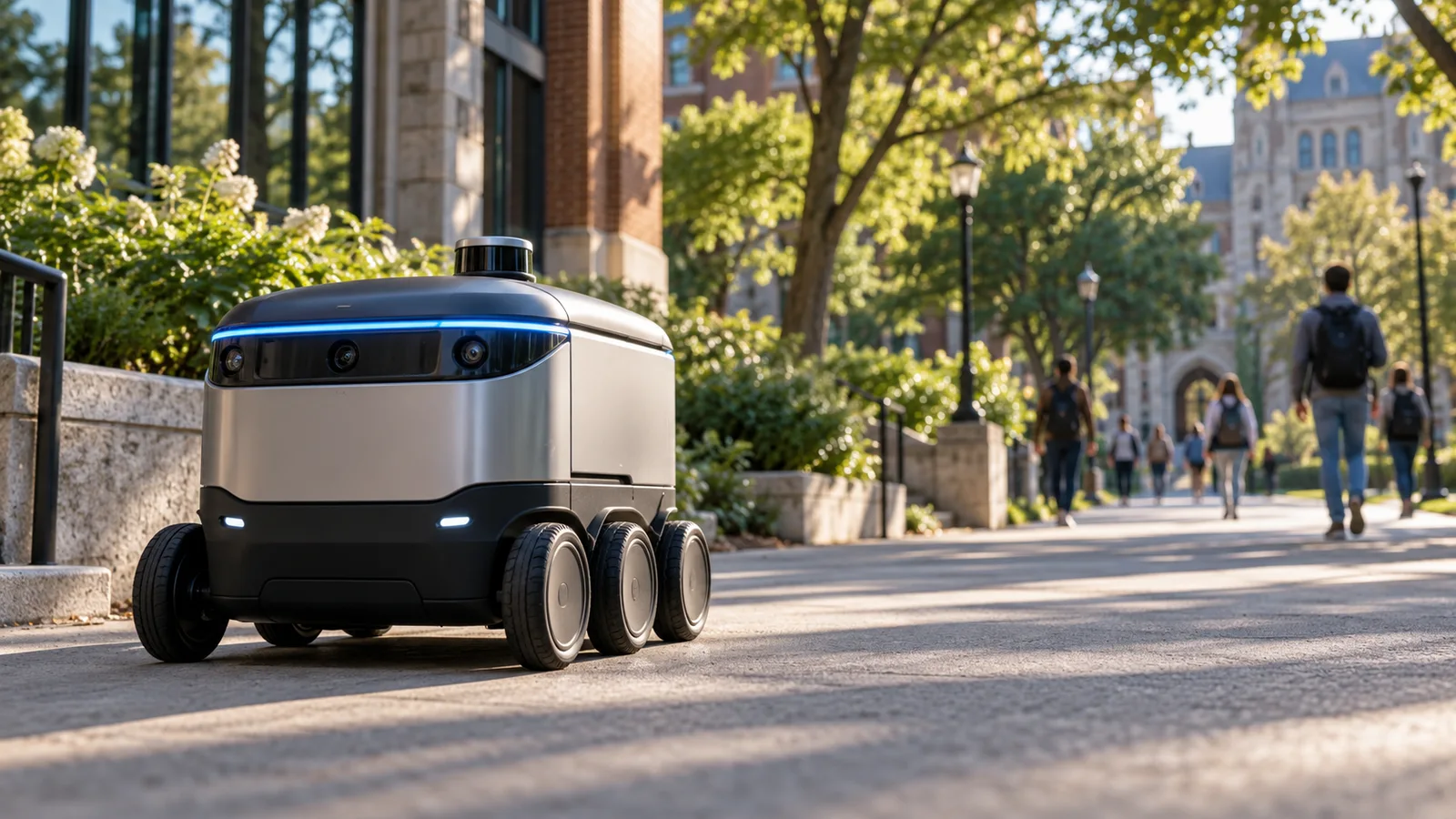
Last-mile delivery
Navigate shared pedestrian spaces where a short journey can contain complex decisions.
What must a machine understand before it can move responsibly through a world it does not control?
The intellectual foundation
Understand the intelligence.
Not just the machine.
The applications change. The disciplines connect.
Level D develops a systems view: how a machine senses its environment, selects a response, controls its movement, and evaluates the result.
- 01The machine
Robotic systems
Read the architecture: the sensors, actuators, software, and physical constraints that make a task possible.
- 02The environment
Perception & machine vision
Interpret what the system can see, what it infers, and where uncertainty enters its decisions.
- 03The action
Planning, motion & control
Connect a desired outcome to a feasible path, a control strategy, and measurable behavior.
- 04The evidence
Simulation & digital twins
Use virtual representations to examine behavior, challenge assumptions, and identify what still needs testing.
- 05The integration
Physical AI
Bring the disciplines together. Evaluate the role of learning and inference within an accountable physical system.
02 / Industry & infrastructure
Understand the operation.
Then evaluate the machine.
Physical AI has to earn its place inside a working system. Useful automation depends on the task, the environment, and the people around it.

Humanoid logistics
Examine how balance, perception, and coordinated movement support work in spaces designed for people.
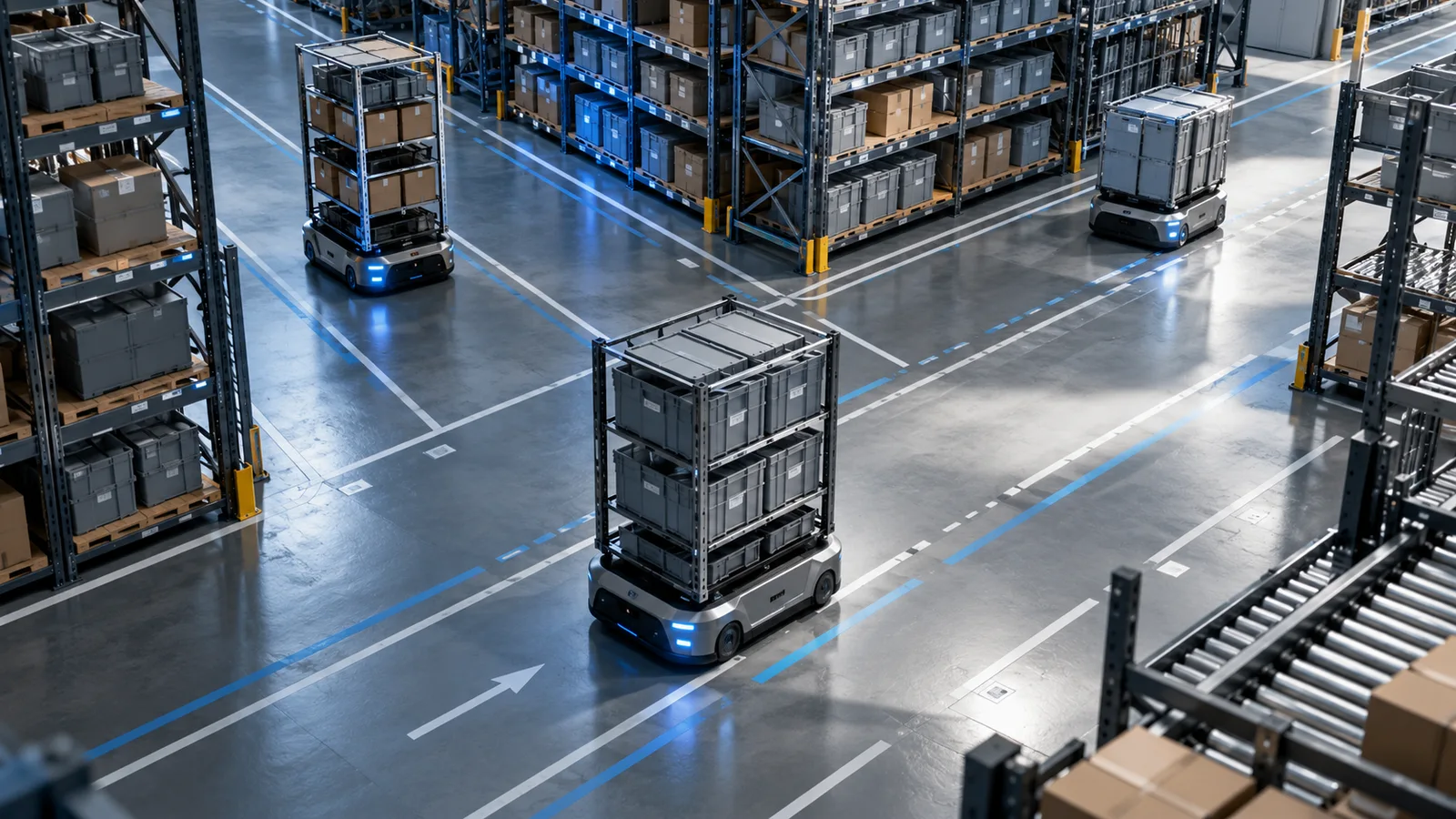
Warehouse mobile fleets
Study how localization, routing, and task allocation coordinate material movement.
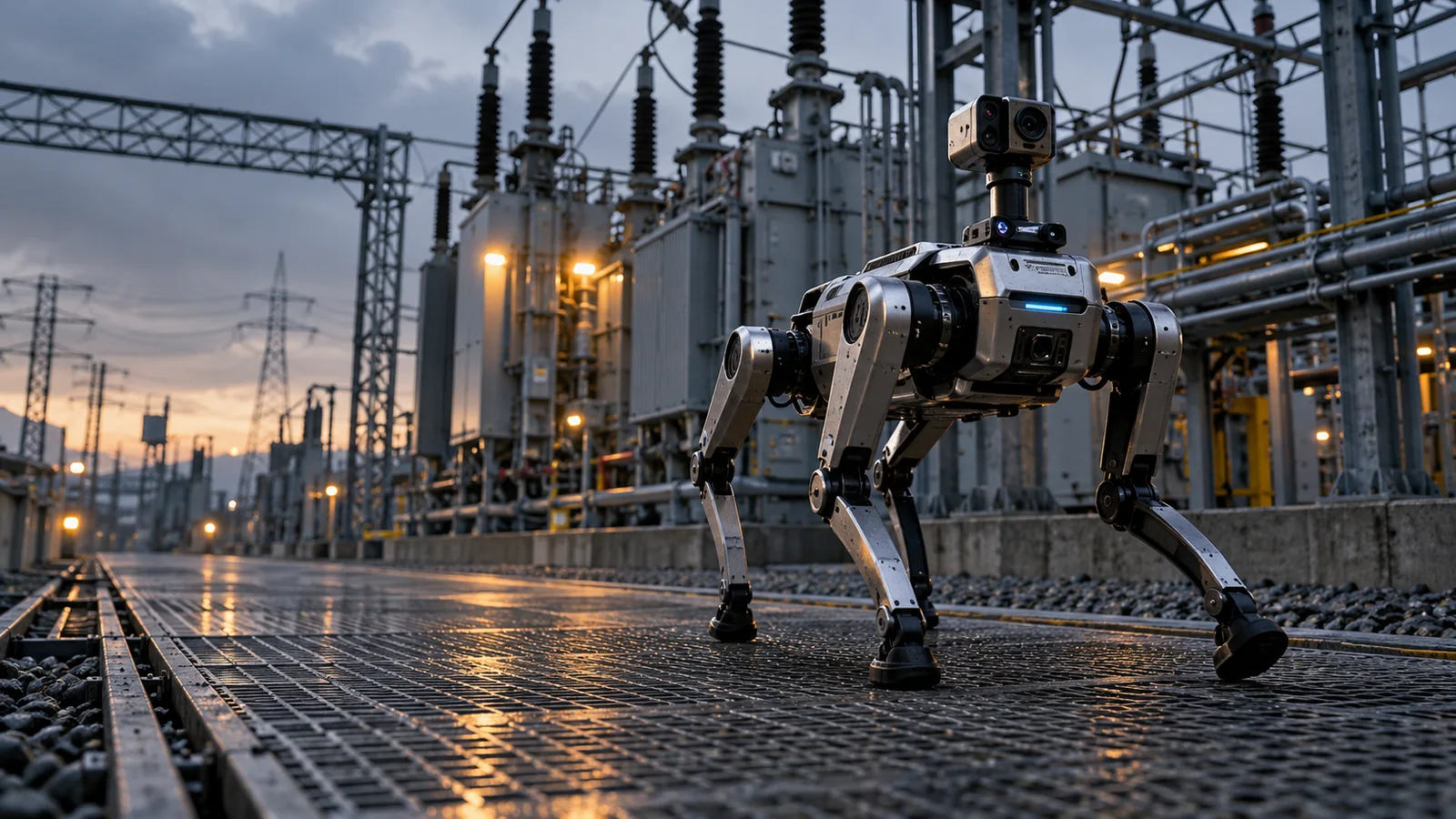
Quadruped inspection
Explore mobile sensing across industrial environments with uneven access and changing terrain.
Where does autonomy improve the operation—and what evidence would justify introducing it?
Simulation-first study
A serious technical pathway.
Without a private robotics lab.
Define a task. Model the conditions. Examine the behavior.
The mandatory pathway is designed for online study through software-based exercises and simulation, without purchasing a robot or attending an in-person laboratory.
03 / Agriculture & managed landscapes
Precision, measured
in the physical world.
In open environments, conditions refuse to stay constant. Light, terrain, vegetation, and weather make adaptation part of the task itself.

Autonomous agriculture
Relate localization and implement control to the demands of working across a field.
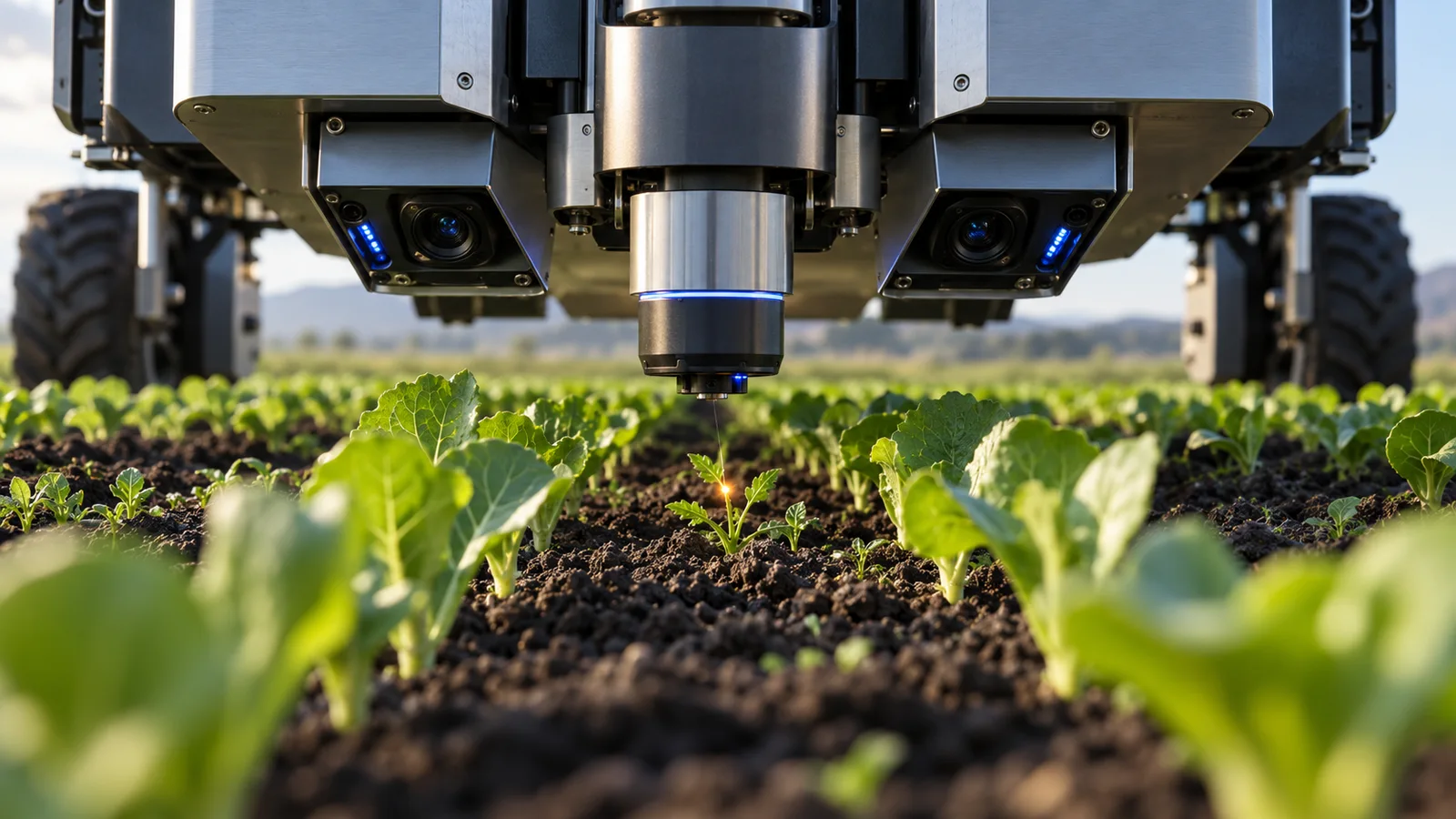
Vision-guided precision weeding
Understand the chain from identifying a plant to directing a highly localized intervention.

Autonomous landscape care
Examine boundary recognition, coverage planning, and obstacle response in everyday terrain.
How do you evaluate a system when its environment changes faster than its assumptions?
Nexus Vector Robotics 101
Ten modules.
One coherent
systems perspective.
From the structure of a machine to a defensible Physical AI project.
The sequence moves through components, perception, software, simulation, and control before bringing them together in an applied capstone.
Curriculum preview. Admissions confirms course availability and delivery details for your pathway.
Discuss your Level D pathway ↗01The Embodied Intelligence Paradigm
The question
What changes when an AI decision becomes a physical action?
Technical focus
Embodiment, feedback, uncertainty, operating boundaries, and human authority.
Applied study
Compare a digital workflow with a mobile delivery task; identify the additional constraints.
Capability developed
Frame physical AI as a system of decisions and consequences.
02Robotic Systems & Components
The question
Which parts make a machine capable of a particular task?
Technical focus
Sensors, actuators, joints, degrees of freedom, power, and system architecture.
Applied study
Build a component map for a mobile robot and explain its functional dependencies.
Capability developed
Read a machine’s architecture and identify its practical limits.
03Robotic Perception
The question
What can a machine observe—and what must it infer?
Technical focus
Machine vision, sensor data, localization, occlusion, and confidence.
Applied study
Evaluate how changing light and partial visibility affect an inspection decision.
Capability developed
Explain the relationship between sensing quality and reliable behavior.
04Programming & System Interfaces
The question
How does a task become an executable sequence?
Technical focus
Commands, state, interfaces, conditions, error handling, and supervision.
Applied study
Outline a delivery routine with explicit stop conditions and recovery steps.
Capability developed
Express a physical task as a bounded software workflow.
05Robot Operating Systems
The question
How do independent software components cooperate?
Technical focus
ROS concepts, nodes, topics, messages, and distributed robotic workflows.
Applied study
Map the exchange of information between a sensor, a planner, and a controller.
Capability developed
Explain how robotic software is organized and connected.
06Simulation & Digital Twins
The question
What can a virtual test establish before deployment?
Technical focus
Digital representations, modeled conditions, test scenarios, and validation limits.
Applied study
Compare a nominal navigation task with an obstacle scenario; document the model’s omissions.
Capability developed
Distinguish useful simulation evidence from untested real-world assumptions.
07Motion, Planning & Control
The question
How is an intended outcome translated into controlled movement?
Technical focus
Coordinate frames, trajectories, constraints, feedback, and physical limits.
Applied study
Compare alternative paths and describe the trade-offs in distance, clearance, and control.
Capability developed
Relate planning decisions to the behavior of a physical system.
08AI-Enabled Robotics
The question
Where should learning and inference enter the control architecture?
Technical focus
AI-assisted perception, decision policies, uncertainty, and supervisory control.
Applied study
Develop a perception-to-action workflow with a defined human intervention point.
Capability developed
Assess the contribution and limitations of AI within a robotic system.
09Robotics in Industry
The question
What makes an application operationally worthwhile?
Technical focus
Integration, material flow, inspection, shared workspaces, and operating requirements.
Applied study
Compare two application settings and recommend where further evaluation is justified.
Capability developed
Discuss technical fit in the language of operations and implementation.
10The Embodied Intelligence Capstone
The question
Can you defend a complete physical-AI concept with evidence?
Technical focus
Problem definition, architecture, software-based testing, evaluation, and limitations.
Applied study
Develop a software/simulation-based project with a system map, test cases, and a reasoned assessment.
Capability developed
Present the intended behavior, supporting evidence, and unresolved deployment questions.
The professional capability
Move beyond recognition.
Develop a reasoned position.
The goal is to understand an intelligent-machine opportunity well enough to ask better questions, compare approaches, and present a credible evaluation.
Capstone study
Physical AI
Evaluation
Dossier.
Problem → Architecture
Test → Assessment
- 01
Frame the opportunity
Define the task, operating conditions, human roles, and criteria that would make an approach worthwhile.
- 02
Explain the system
Map perception, software, planning, and control. Show how the parts depend on one another.
- 03
Examine the evidence
Use software-based scenarios to evaluate behavior, then distinguish modeled results from real-world assumptions.
- 04
Defend the recommendation
Present technical trade-offs, limitations, and the questions an implementation team would need to resolve.
04 / Human mobility & shared spaces
Engineering intelligence
around human life.
The closer a system operates to people, the more consequential its behavior becomes. Comfort, timing, accessibility, and oversight belong inside the technical conversation.
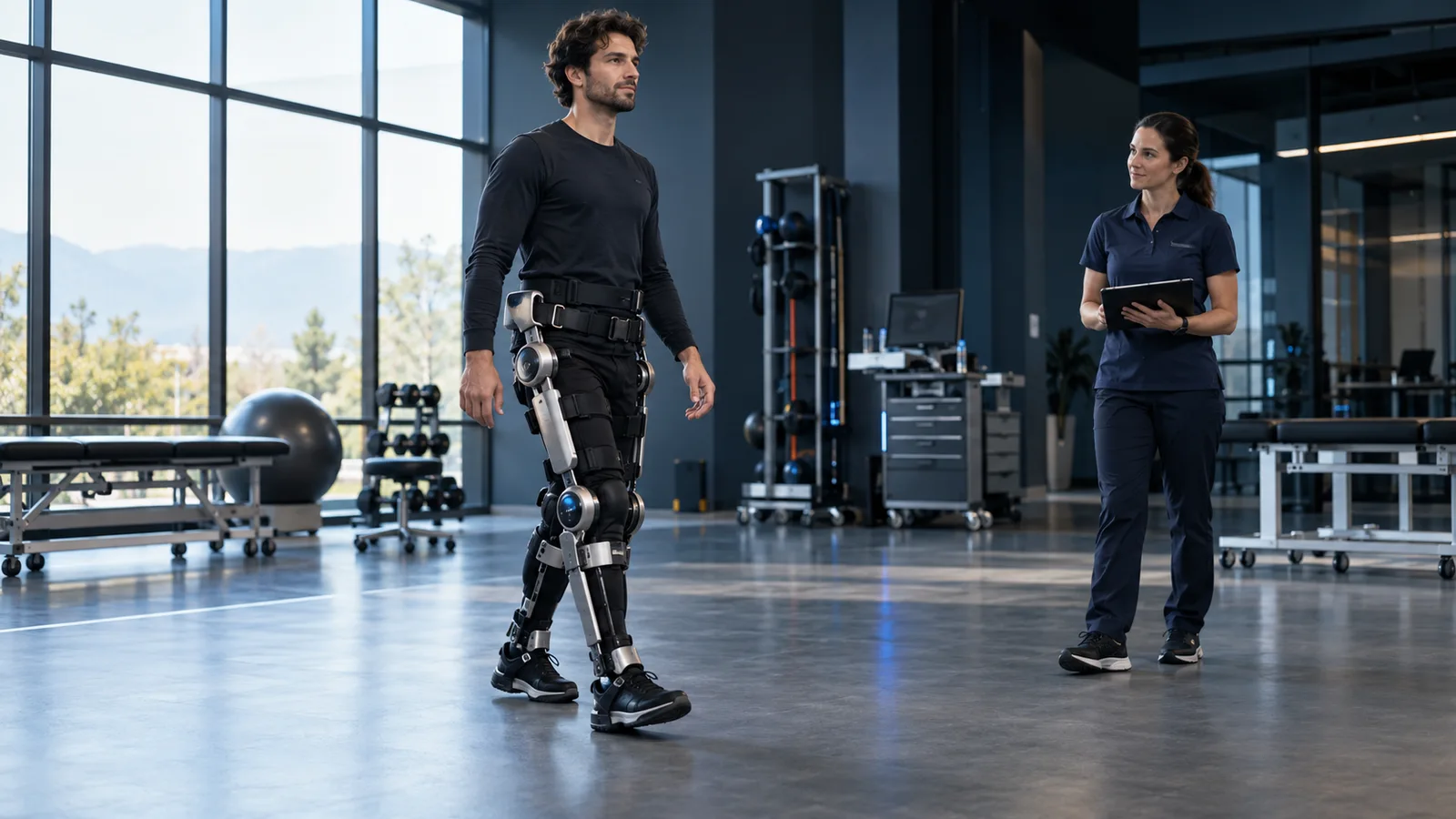
Wearable exoskeletons
Explore the coordination of sensing, balance, and powered assistance around a person’s movement.
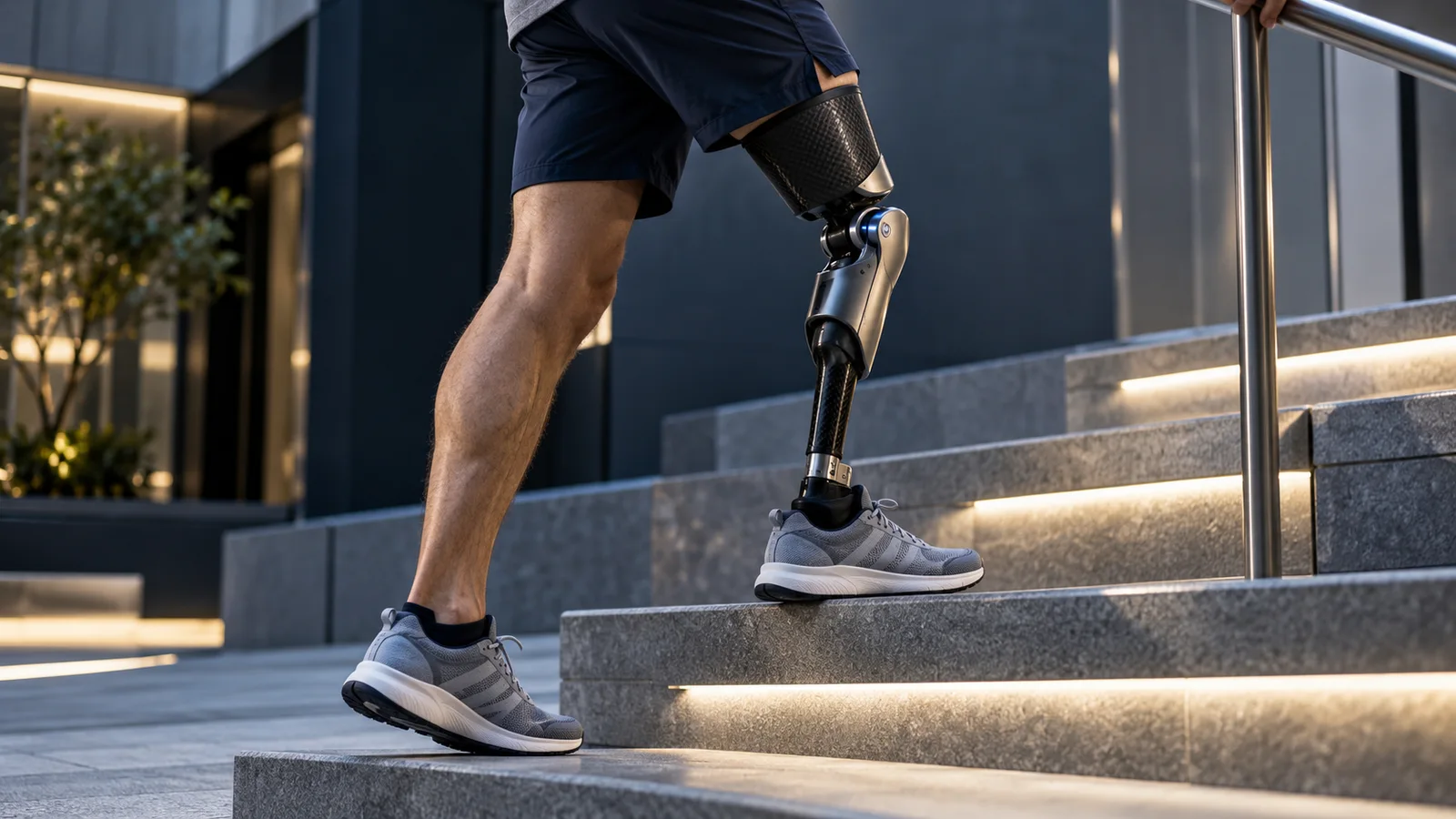
Adaptive prosthetic systems
Study how sensor-informed control can respond to gait and changes in terrain.

Autonomous facility care
Evaluate coverage, obstacle detection, and service continuity in spaces people share.
How should an intelligent system respond when human needs—not machine throughput—define success?
For the decisions ahead
For professionals
who need to see
the whole system.
Whether you design solutions, advise organizations, lead operations, or explore a technology venture, physical AI calls for more than familiarity with the hardware.
Level D is designed for advanced learners who want to connect technical fluency with business context, implementation judgment, and responsible oversight.
An advanced educational pathway—not an engineering degree, clinical qualification, professional license, or employment guarantee.
The Nexus Vector progression
A broader field.
A deliberate ascent.
Level D extends the Academy’s foundation in AI fluency, solution delivery, and enterprise governance into the decisions surrounding intelligent machines.
- A
Operational
IntelligenceAI Fluency &
Business Judgment - B
Engineered
IntelligenceSolution Design
& Delivery - C
Institutional
IntelligenceEnterprise Architecture
& Governance - D
Embodied
IntelligenceRobotics &
Physical AI
Admissions reviews your background and confirms prerequisites, prior-learning recognition, and the curriculum access included in your offer.
A curated technical education
The Academy provides
the connective framework.
Robotics 101 supplies the intellectual sequence. Software exercises and selected independent resources provide additional technical context. The value is in understanding how the pieces relate.
Nexus Vector Robotics 101
Ten modules, applied analysis, and a software/simulation-based capstone.
Robotics software & simulation
ROS concepts, machine perception, digital representations, and the systems used to reason about robotic behavior.
Specific awards. Explicit requirements.
External certifications are separate from Academy instruction. Admissions confirms any included credential pathway, provider assessment, software access, or additional fee.
Explore the Academy credential directory ↗05 / Remote & extreme environments
Where access is difficult,
autonomy becomes consequential.
Above infrastructure. Beneath the ocean. Beyond Earth. Distance makes sensing, local decision-making, and recovery strategies central to the mission.
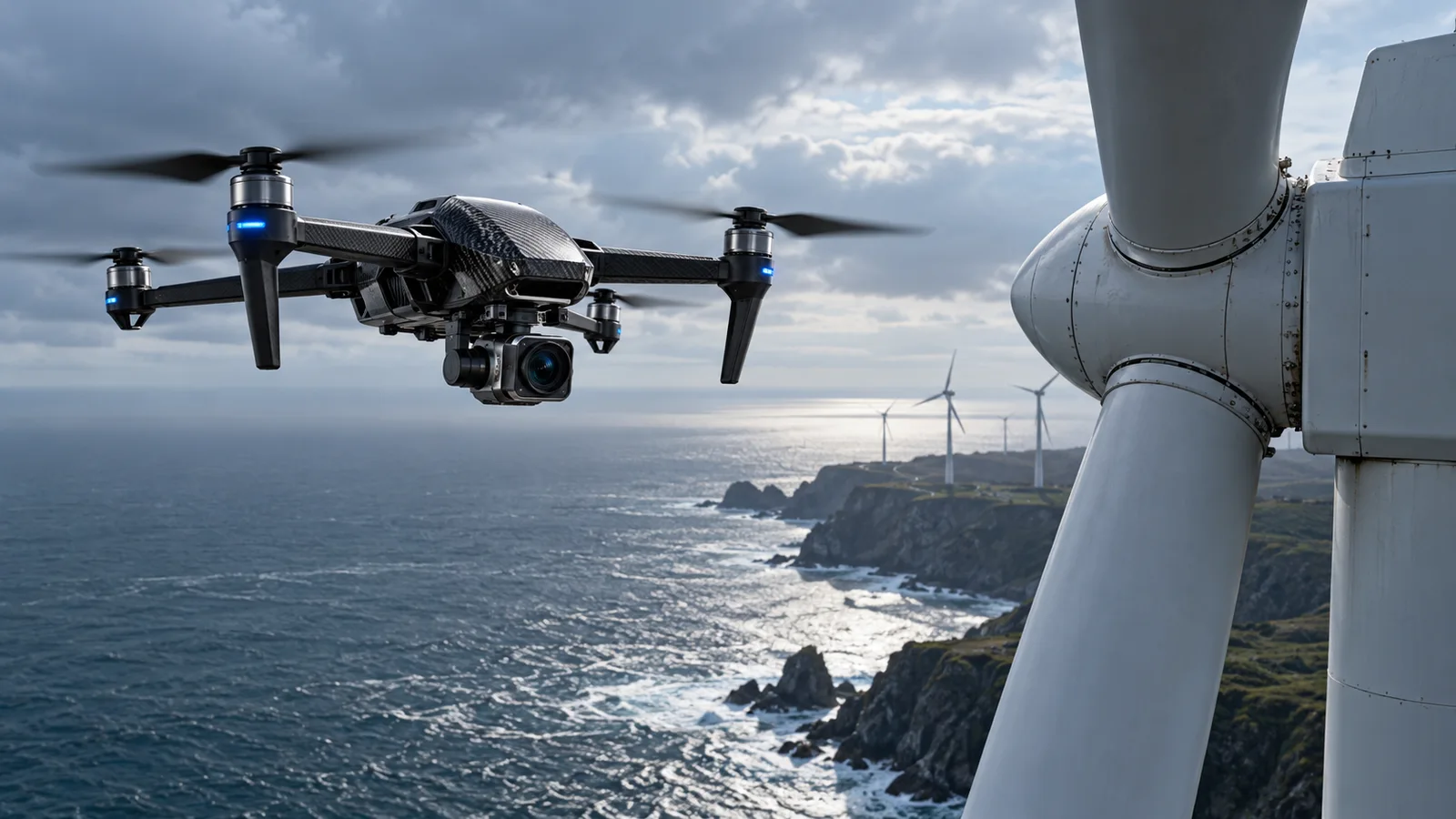
A different vantage point.
Examine navigation, sensor coverage, and inspection objectives around complex infrastructure.

Intelligence below the surface.
Consider localization, energy, and mission planning where visibility and communication are constrained.
Before you take the next step
Ambition deserves
clear expectations.
A precise understanding of the pathway is part of making a good decision.
Will I need robotics hardware or a physical lab?
The mandatory pathway is designed around online instruction and software-based study. It does not require a robot purchase or in-person laboratory attendance. Your offer confirms the compatible software and any associated costs.
Will I study every application shown here?
The imagery illustrates the breadth of embodied intelligence. Robotics 101 teaches the common concepts that connect these applications; it is not a separate specialist qualification in every industry shown.
What prior experience will I need?
Level D is an advanced pathway. Admissions reviews your AI, technical, and professional background to determine relevant preparation and your appropriate starting point. No automatic direct-entry eligibility is implied.
What does the capstone demonstrate?
The intended capstone connects a defined problem, a robotic-system concept, software-based evaluation, and a reasoned assessment. It demonstrates your analysis of a modeled system; it does not authorize deployment or certify a physical machine as safe.
Which credentials and software are included?
Your admissions offer identifies the confirmed curriculum, software requirements, and any external credential opportunities. Third-party awards require the issuing provider’s own eligibility and assessments. Do not assume subscriptions or examination fees are included unless specified.
What are the tuition, duration, and A–C inclusions?
These details are confirmed through admissions before enrollment. Level D follows the Academy’s cumulative academic structure; exact access, prior-learning recognition, study requirements, and all required costs must be set out in your offer.
Your Level D conversation
Bring your experience.
Expand your field of possibility.
Tell us what you want to understand, evaluate, or help bring into practice.
Start a conversation about your background, technical interests, and the place embodied intelligence could have in your professional direction.
Receive relevant program information and guidance on the application process. Tuition, study expectations, and confirmed inclusions are clarified before you commit.
This form requests application information. It is not an enrollment, payment, or acceptance.

Nexus Vector Academy / Level D
A wider world of intelligence.
A more capable perspective.
Prepare to understand the systems that perceive, decide, and act beyond the screen.